Tikal Temples and Pyramids: Maya Ruins Guide
You hear the howler monkeys before you see the stone. Their roar sounds like something prehistoric tearing through the fog, a guttural rasp echoing off wet cedar leaves at five in the morning. When the mist finally breaks, you find yourself staring straight up at steep limestone steps disappearing into a wall of green vines. Exploring the tikal pyramids guatemala hides within its northern jungle feels less like walking through an outdoor museum and more like intruding on an ancient world that the rainforest is slowly reclaiming.
Most travelers arrive knowing about the famous towering facades, but standing beneath them changes your perspective entirely. Between the calls of toucans, the thick Petén mud, and the sheer vertical drop of these structures, it is easy to get disoriented. This guide walks you through the primary temples, hidden complexes, and practical realities of navigating the sprawling ruins without burning out before noon.
The Great Plaza: Temple I, Temple II, and the North Acropolis
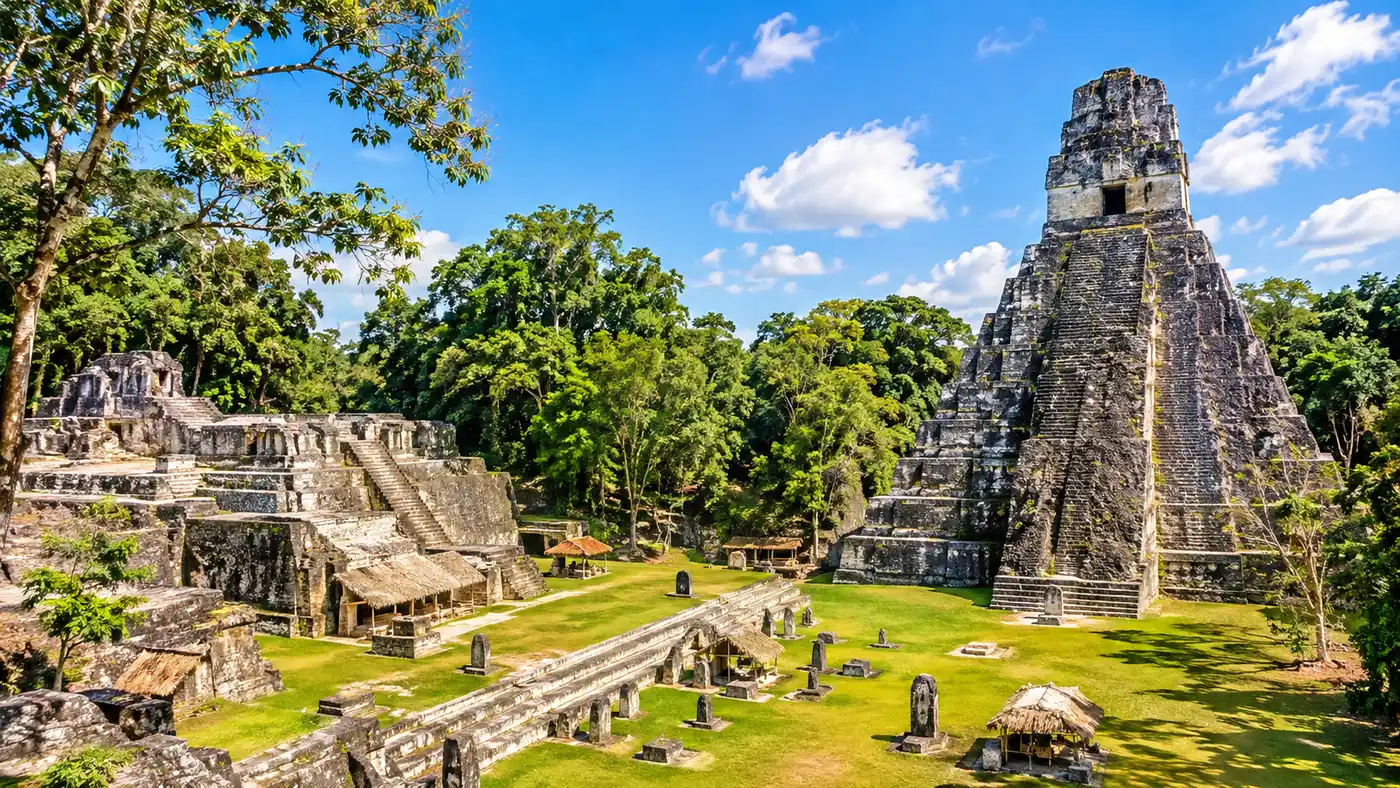
The Grand Plaza serves as the physical and ceremonial heart of the city. You usually stumble into it after a 25-minute trek down a packed dirt trail shaded by Spanish cedar and mahogany trees. Suddenly the forest opens up, revealing a massive limestone clearing bordered by two towering giants facing each other in quiet standoff. It is breathtaking.
On the east side rises Temple I, also known as the Temple of the Great Jaguar Guatemala travelers recognize from classic postcards. Jasaw Chan K'awiil I, one of Tikal's greatest rulers, had it built around 732 AD to serve as his funerary shrine. It rises 47 meters into the air, deliberately steep to bring his spirit closer to the heavens. You cannot climb this particular guatemala maya temple anymore. A visitor fell decades ago, prompting officials to close the precarious limestone stairs for good, but sitting on the plaza grass staring up at the carved wooden lintel remnants still delivers goosebumps.
Directly across from it sits Temple II, the Temple of the Masks. Built for Jasaw's wife, Lady Kalomt'e Zutz', it stands slightly shorter at 38 meters. You can actually climb this tikal temple via a sturdy wooden staircase built around the back. The platform up top offers an eye-level view of the Temple I roof comb, framed against a blank wall of emerald jungle canopy. It gets crowded by 10:00 AM, so climb it early when the plaza is still quiet.
Note: Park rangers strictly enforce barriers around unstabilized limestone. Never scramble up unexcavated mounds or roped-off stairs, as the soft limestone crumbles easily underfoot and repairs take years.
To the north sits the North Acropolis tikal visitors often wander through without realizing its depth. Unlike the single-phase temples facing it, this complex was rebuilt over and over for more than a millennium. Archeologists have dug through dozens of stacked architectural layers here, discovering royal tombs, early shrines, and giant painted stucco masks dating back centuries before Temple I went up. Poke around inside the dark interior tunnels and shadowed corners. It offers some of the best shade on the entire plaza when the Petén sun starts beating down.
Book your tikal tours experience:
Temple IV and the View Above the Forest Canopy
If you only have the energy to climb one structure during your visit, make it tikal temple iv. Rising roughly 65 meters above the forest floor, it remains one of the tallest pre-Columbian structures in the Americas. It was commissioned around 741 AD by Yik'in Chan K'awiil, the son of the king buried in Temple I. The walk from the Great Plaza takes about 18 minutes along wide, muddy jungle paths where coatimundis frequently forage through the leaf litter.
The pyramid itself remains mostly unexcavated, appearing as a massive earthen mountain smothered in roots and strangler figs. You ascend the back using a long system of wooden stairs and platforms. Your legs will burn. Take a breather every flight or two, drink water, and keep moving. The reward at the top is iconic.
George Lucas famously used this vista for the Rebel base on Yavin 4 in the original 1977 Star Wars film. Standing on the wooden viewing deck, you sit completely above the canopy. Below you stretches a green ocean of jungle extending all the way toward Belize, broken only by the limestone tips of Temples I, II, and III piercing the tree line. In the wet season, low-hanging clouds drift between the temple combs like smoke. Honestly, I think it is the single most humbling view anywhere in Central America.
- Best vantage point: Arrive before 7:30 AM to watch the morning mist burn off the distant limestone combs.
- Physical demand: Roughly 200 wooden steps; manageable for most fitness levels if taken at a steady pace.
- Wildlife spotting: Spider monkeys frequently swing through the branches alongside the western staircase.
- Sun exposure: The top platform has zero shade, so bring a wide-brim hat if visiting midday.
Lost World, Temple V, and Lesser-Known Pyramids in Guatemala
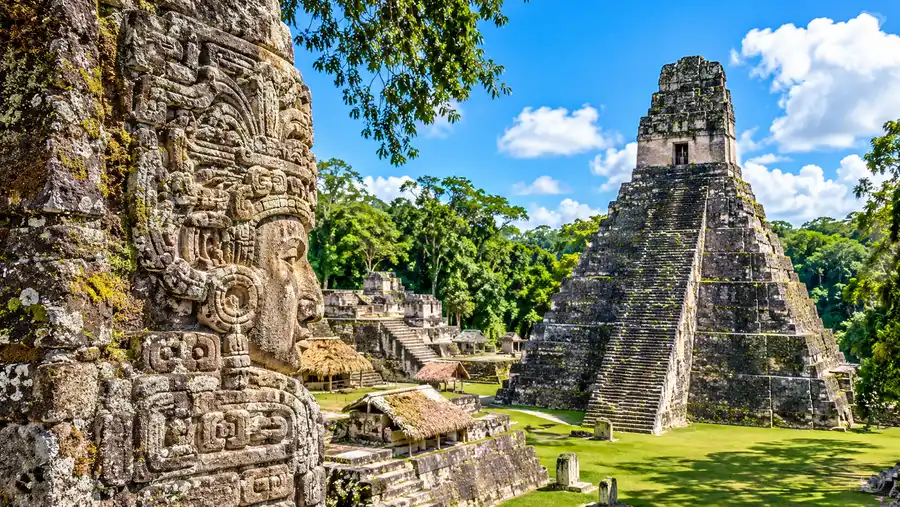
Most day tours rush visitors between the Great Plaza and Temple IV, completely missing the southern and western complexes. That is a mistake. The Mundo Perdido, or Lost World complex, represents some of the oldest architecture at the site, predating the classic tikal mayan ruins by centuries. The Great Pyramid here was reconstructed in several distinct phases, starting around 600 BC. Its broad, tiered platform feels fundamentally different from the razor-thin, soaring towers elsewhere in the park. It feels older, heavier, and far more grounded.
A short distance away sits Temple V, my personal favorite tikal pyramid. Standing 57 meters tall, it dominates the southern boundary of the central precinct. The restoration here is immaculate. The single staircase running up its northern face looks nearly vertical, curving gracefully upward toward a massive, seven-room shrine. While you cannot climb the ancient front stairs, the surrounding clearing is usually deserted, surrounded by colossal ceiba trees that make you feel tiny.
The sheer quantity of monuments here often surprises travelers. When people ask how many pyramids in guatemala are still buried under dirt, archeologists just laugh. Within Tikal's 575 square kilometers alone, satellite scans have mapped thousands of mounds, residential compounds, and defensive ditches still buried beneath the soil. You will walk past dozens of humped mounds blanketed in trees without even realizing an ancient noble residence or forgotten shrine sleeps three feet beneath your boots.
Pro tip: Walk the perimeter path behind Temple V down to the South Acropolis around 2:00 PM. The tour groups have usually cleared out, leaving you entirely alone with the green parrots feeding in the high branches.
Book your tikal tours experience:
Comparing the Major Pyramids at Tikal
To help plan your route across the park, here is how the primary pyramids stack up in terms of physical scale, access, and history.
| Structure | Height | Estimated Date | Climbable? | Highlight |
|---|---|---|---|---|
| Temple I (Great Jaguar) | 47 meters | 732 AD | No | Iconic burial pyramid on the Great Plaza |
| Temple II (Masks) | 38 meters | 700 AD | Yes (wood stairs) | Perfect view of Temple I roof comb |
| Temple III (Jaguar Priest) | 55 meters | 810 AD | No | Partially restored, surrounded by deep woods |
| Temple IV (Two-Headed Serpent) | 65 meters | 741 AD | Yes (wood stairs) | Panoramic jungle view above the tree line |
| Temple V | 57 meters | 700 AD | No | Steep vertical restoration, very quiet area |
| Lost World Pyramid | 31 meters | 600 BC - 300 AD | Yes (stone stairs) | Oldest astronomical complex in the city |
Chichen Itza vs Tikal: What Sets Guatemala Mayan Ruins Apart
People planning a trip to Central America often debate chichen itza vs tikal when deciding where to allocate their travel budget. Having spent time at both, they offer completely opposite experiences. Chichen Itza in Mexico is manicured, flat, and heavily managed. You walk across tidy manicured lawns alongside thousands of day-trippers while hundreds of vendors hawk wooden jaguar whistles every ten feet. You cannot climb any structures there, and the heat reflects brutally off the bare, sun-baked limestone.
Tikal is raw jungle. The ruins of this mayan temple guatemala powerhouse sit inside a protected biosphere reserve where nature still holds sway. You walk through dense, shaded secondary forest where ocellated turkeys scurry across the trail and keel-billed toucans clatter in the canopy. The ruins emerge organically out of the wilderness. Because the park covers such a massive footprint, crowds disperse quickly. Walk twenty minutes in any direction away from the Great Plaza, and you will find yourself completely alone among guatemalan pyramids that look almost exactly as they did when explorers first documented them in the 1840s.
If you want easy accessibility, polished pathways, and resort convenience, Mexico wins. But if you want to feel like an explorer tracking lost civilizations through a humid rainforest, these mayan ruins guatemala tikal treasures win without question. Before booking, check out our guide on visiting Tikal guide and tickets to ensure you purchase the correct park entry permits in advance, as tickets cannot be bought at the interior park gates.
Navigating the Site: Practical Tips for Exploring Tikal Ruins Guatemala
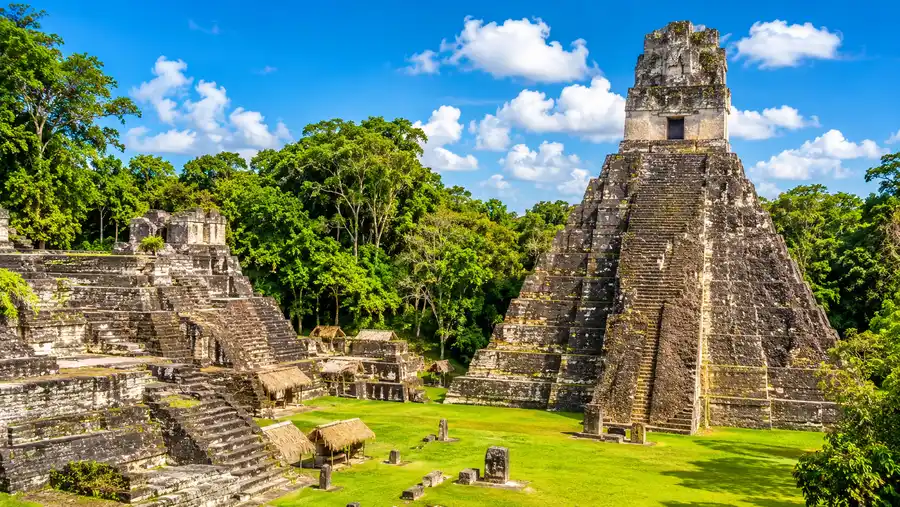
Visiting these guatemala ruins requires a surprising amount of stamina. A standard loop covering the Great Plaza, Temple IV, Mundo Perdido, and Temple V easily covers 10 to 14 kilometers of walking over uneven terrain, exposed tree roots, and slick limestone. The Petén humidity is oppressive year-round, draining your water supply faster than you expect.
Hiring an accredited local guide at the park gate costs around $40 to $60 for a private morning tour, and it is money well spent. Without someone pointing out the subtle architectural shifts, the hidden ball courts, and the carved stelae markers, these mayan temple tikal structures just look like big piles of old rock. A good guide spots things you would step right past, like green tree vipers curled around vine stems or medicinal copal trees used for ceremony resin. If you are coming from abroad, read our overview of Tikal history and ancient Maya facts to get baseline context on the dynasties before setting foot in the forest.
- Footwear choices: Wear broken-in trail shoes with aggressive tread. Smooth tennis shoes turn into ice skates on wet limestone steps.
- Hydration rule: Pack at least two liters of water per person. There are small stalls near the main plaza entrance, but none out at Temple IV or the Lost World.
- Insect protection: Mosquitoes can be savage after afternoon downpours, so carry repellent with high DEET or picaridin.
- Timing your entry: Enter the gates right at 6:00 AM. You beat the midday heat and the tour buses coming from Flores, giving you three peaceful hours of exploration.
Frequently Asked Questions about tikal pyramids guatemala
Can you climb the pyramids at Tikal?
You can climb several structures, but only using designated wooden stairs installed to protect the soft limestone. Temple II, Temple IV, and the Lost World Pyramid are fully climbable. Temple I and Temple V are strictly closed to climbing for conservation and safety reasons.
How many pyramids are there in Tikal?
While the central park features six primary soaring temples that dominate the skyline, archeologists have identified over 3,000 individual structures within the main 16-square-kilometer reserve, including dozens of smaller ceremonial pyramids, acropolises, and ancestral shrines.
How much time do you need to see the ruins?
Plan for at least five to seven hours inside the park to see the major plazas, climb Temple IV, and walk the jungle loops comfortably. Rushing through the site in two hours only covers the Great Plaza and leaves you thoroughly exhausted.
Quick Reference
- Entry fee: 150 GTQ (roughly $19 USD)
- Tallest pyramid: Temple IV at 65 meters
- Climbable temples: Temple II, Temple IV, Lost World
- Opening hours: 6:00 AM to 5:00 PM daily
Book your tikal tours experience:
The Bottom Line
Standing atop the ancient limestone looking across miles of unbroken forest puts our modern world into sharp relief. Tikal collapsed over a thousand years ago, yet the sheer engineering brilliance of these guatemalan mayan temples defies the encroaching jungle every single day. Go early, lace up sturdy shoes, drink plenty of water, and give this timeless corner of Petén the slow exploration it truly deserves.
Read more about tikal tours.